
Technology
The Hottest New Side Hustle Is Stripping Copper Wire and Posting About It
By Katherine Langford
Wired
Advertisement · Why this ad?
Marcus manages the day-to-day editorial workflow across all brands, coordinating coverage assignments and ensuring editorial standards are met. He previously served as city editor at the Pioneer Press and holds a degree in Political Science from Carleton College.
More from Marcus →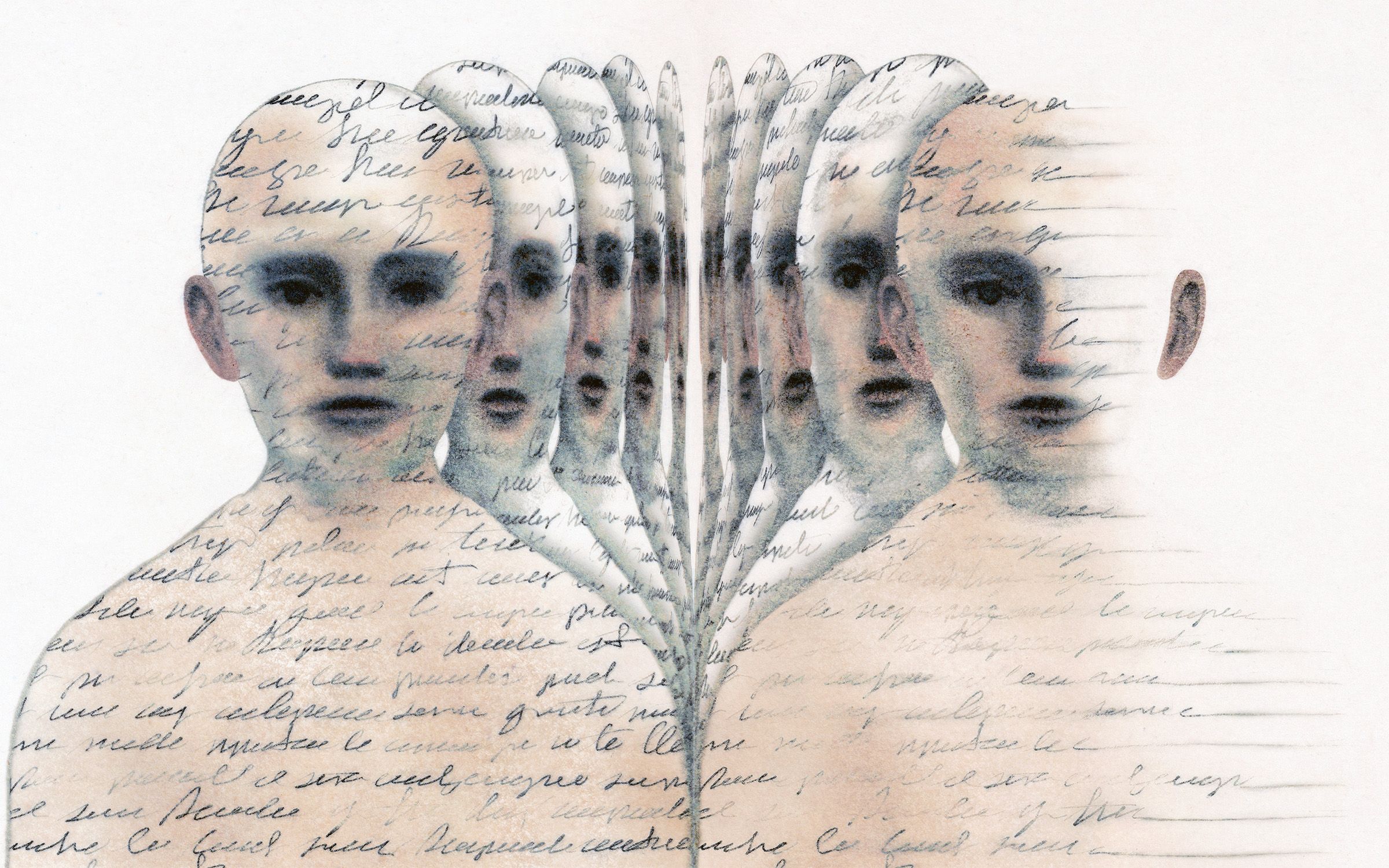
Duncan FyfeThe Big StoryOct 26, 2026 6:00 AMYou Finally Got a Wikipedia Page. Then It VanishedEvery day, Wikipedia biographies of living people are flagged for deletion because the subjects are not “notable” enough. How do these poor souls take the news?ILLUSTRATION: ALDO JARILLOSave StorySave this storySave StorySave this storyWhat do you need to know—need to know—about Xavier Trudeau? The eldest son of former Canadian prime minister Justin, the teenage Trudeau has recently begun performing R&B under the mononym Xav. But, with all due respect to Xav, do those facts make him a person of note? Should you expect to be able to read about him on Wikipedia? What about Evanescence guitarist Tim McCord, or 2012 Yachtmaster of the Year Rainer Holtorff?All three have had a biography on Wikipedia; all three of those biographies were considered for deletion this year on the grounds that the subjects were not notable enough to warrant a biography at all. Every day, dozens, sometimes hundreds, of Wikipedia biographies—of child actors turned LA realtors, retired ambassadors, soccer players who have played less than 10 minutes of professional soccer—are purged from the world’s free encyclopedia.It’s not as though Wikipedia, which hosts over 7 million articles in the English language, doesn’t have the space. But Wikipedia has only so many volunteers to monitor its contents. To this day, Wikipedia editors are discovering hoaxes that have gone undetected for decades. The time it takes to verify the release dates of Xav’s three singles is better spent—the logic goes—by asking whether the American Civil War officer Nathaniel Lyon really drank mustard during battle, as was claimed in his Wikipedia biography for 17 years. Wikipedia removed the mustard claim, not because it was proven wrong, but because there was no reliable evidence for it. “We’re not really looking for what’s true,” Britta Gustafson, who has been editing Wikipedia since 2001, told me. “We’re looking for what’s verifiable.”Wikipedia editors do not themselves decide that a person is not notable, only that there is a lack of reliable evidence to support the claim. One person who recently lost her Wikipedia biography on notability grounds is Kimberly Small, the CEO of a Nevada nonprofit that supports survivors of sexual assault. The debate occurred in a public page on Wikipedia itself; it’s in that space that the really tricky decisions about what is and what isn’t good enough for the encyclopedia are made. One editor raised a question: “How should we judge not-for-profit executives? By the nature of their job, the focus is, as it should be, on the organization and the work the organization does, not them.” Another editor replied: “I don’t think there is anything wrong with not-for-profit executives being less often individually notable. Wikipedia coverage is not a prize.”Is it not? “Having an article says something,” Gustafson admitted. “It implies something.” For six weeks over April and May, I reached out to hundreds of people who were about to lose their Wikipedia page, almost all of whom were learning that information from me. “If you want to write something to save the page, I would appreciate it,” a Spanish filmmaker told me. A biography on Wikipedia might not be intended as a prize, but nobody knows its value like the people who’ve had one and then lost it.Martina Dimoska is a scientist, originally from North Macedonia, who works at NASA’s Johnson Space Center in Houston. Specifically, Dimoska is an “analog astronaut”—she takes part in missions that simulate a space environment—and a “science communicator.” She posts often about her work in the can-do, aspirational register that is de rigueur on LinkedIn, where she cites her “recognition by … Forbes, Bloomberg, the United Nations … and global innovation networks.” A Facebook reel of hers, filmed during the crew announcement of NASA’s upcoming Artemis III mission, shows Dimoska alongside the text, “When you work hard so you belong in rooms where history gets proactively written.” On TikTok, she’s had paid partnerships with a makeup brand whose products are tested for effectiveness during spaceflight.On April 29, Dimoska posted on Facebook, “Wait … I’m on Wikipedia now???” She went on: “A few years ago, building a career in space from the Balkans felt impossible. And now … somehow, that journey is part of the public record. I’m incredibly grateful that [the biography] is there … My hope is that through my journey, I will help a new generation to begin to see space as accessible, not distant.”The next day, Dimoska’s page was nominated for deletion.Anne Clin, who has edited Wikipedia since 2005 under the name Risker, warned me that it’s folly to celebrate becoming the subject of a Wikipedia article. “Especially if you’re what we call ‘borderline notable,’” she said.The other taboo is editing information about yourself. You can’t do that—even if the existing facts about you are wrong—without disclosing a conflict of interest. Even then, it’s strongly discouraged. Jimmy Wales, the cofounder of Wikipedia, has been caught editing his own Wikipedia biography multiple times; that he did so is now part of his Wikipedia biography. In 2022, the novelist Emily St. John Mandel, unable to update her biography to reflect her recent divorce, sat for an interview solely to create a secondary source for that information.Some high-profile Wikipedia editors and volunteers have bio pages about themselves. Clin is occasionally asked if she would want one. She doesn’t merely refuse; she actively sabotages the possibility. “You cannot write a proper biographical article about me, because I don’t give out enough personal information to do that,” she said. “Absolutely not. Absolutely not.”Among the people reading Martina Dimoska’s Facebook post about her new Wikipedia page was Kiril Simeonovski, an economist in Skopje, Macedonia, and a Wikipedia editor since 2008. Simeonovski found the post self-congratulatory and
By Katherine Langford
Wired

By Marcus Chen
Wired

By Marcus Chen
Wired
By Marcus Chen
Wired